UI vs. UX
UI focuses on the visual elements users see and interact with, such as buttons, icons, colors, and layout, while UX covers the overall experience, ensuring ease of use, clear navigation, and satisfying user journeys; together they shape brand perception and product success.
If you though these were interchangeable terms you wouldn’t be alone. User Interface (UI) and User Experience (UX) as terms and concepts are frequently conflated. While the are very different, the distinction can be hard to immediately grasp.
You have remembered learning in early geometry lessons that all squares are rectangles but not all rectangles are squares…We like to use this comparison to quickly illustrate the distinction between UI and UX.

Similar to how a square is a specific type of rectangle, your UI is a specific aspect of your overall UX. There are many more aspects to a good user experience than only the user interface design. In fact, it’s often argued that the UI is typically the least critical part of ensuring a strong UX is in place.
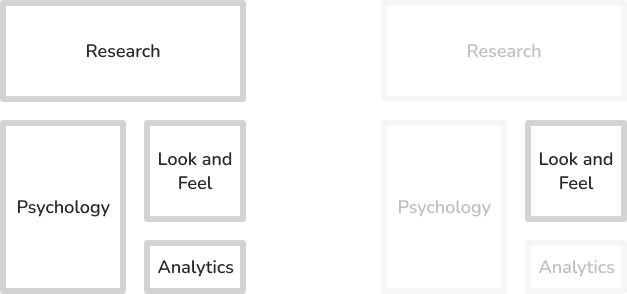
Don’t get us wrong, a good UI is important—it can improve brand perception and create trust. A good UI might sway a user into giving your product or platform a try, but if the UI isn’t built on top of a strong foundational UX you’ll likely suffer from issues with conversions, retention, and reengagement.
Think of your UI as the final step in building a house. It’s the paint, the decor, the immutable quality that says “this belongs to my brand no one else's.” Just like a house, if there’s cracks in the foundation it’s going to fall apart—no amount of shiny finishings can fix that.
To continue this analogy, your user experience is that foundation of what you’re building. It’s the architectural blueprints and the licensed contractors. It’s making sure the electricity is wired up before the drywall is hung, and making sure you have enough bathrooms to support the number of occupants that are going to live there. If you ignore these aspects when building a home it’s sage to say the project will have problems. At worst people won’t want to live there, and at best people won’t like living there very long.
Now that we’ve defined why UI and UX are different entities let’s dive into what each of them really are.
What is a User Interface?
Your user interface, at the core, is everything a person can see and touch on a screen. Your UI design defines how your brand is applied across your website or product—it is the look and feel of the individual elements such as:
- Buttons, menus, icons, colors, fonts, and spacing
- Photography and illustrations
- Sometimes, how content is arranged on a page.

A lot of visual accessibility issues are impacted by UI decisions.
What is a User Experience
UX can feel a lot harder to explain, and to understand. The result of UX is, simply, how a person feels when using a website, product, or service. While UI defines the look of single moments within an experience, UX defines the entire journey as whole.
At a fundamental level UX works to evaluate and answer the following key questions:
- Is this easy to use?
- Can people find what they’re looking for or accomplish their goals?
- Does the process make sense from start to finish?